Eligibilty

Should have completed B.Tech / B.E / M.Tech / M.E with a minimum of 50% marks or equivalent CGPA from a recognised university.

Apply Now

Programme Overview

The Semiconductor Tech & VLSI Chip Design by CCE IISc Bangalore – Batch 01 is a 6-month live online programme designed for engineers and technology professionals looking to build expertise in semiconductor technologies and VLSI design.

This programme blends theoretical knowledge, practical simulation tools, and hands-on learning to help participants understand how modern chips and sensors are designed, simulated, fabricated, and integrated into real-world systems.

Participants will learn critical concepts including:

  • Semiconductor fabrication processes
  • MEMS and sensor system design
  • FEM multiphysics simulations using COMSOL
  • Analog and digital VLSI chip design
  • Electronic system integration
  • Cleanroom fabrication workflows

With guidance from IISc faculty members and industry experts, learners will work on capstone projects based on real semiconductor and chip design applications.

Hands-On with Industry Tools

Key Programme Highlights

Live interactive classes by IISc faculty

Optional 3-day campus visits at IISc Bangalore cleanroom labs

Hands-on capstone projects

Industry-aligned semiconductor curriculum

Exposure to real chip design workflows

Certification from CCE, IISc Bangalore

Why Choose This Semiconductor & VLSI Programme?

  • Learn from IISc Bangalore
    India’s premier research institute with world-class semiconductor laboratories and globally recognised faculty.
  • Industry-Aligned Curriculum
    Comprehensive modules covering MEMS, VLSI design, semiconductor fabrication, FEM simulation, and system integration.
  • Hands-On Learning
    Gain practical exposure through simulation tools, capstone projects, and optional cleanroom lab experience at IISc.
  • Career-Focused Skills
    Develop high-demand skills for roles in chip design, semiconductor manufacturing, electronics engineering, and sensor systems.
  • Portfolio-Ready Capstone Projects
    Build real-world semiconductor design projects using COMSOL, LTSpice, and VLSI design frameworks.

Curriculum Overview

Module 1 - Introduction to Sensors and MEMS Sensor Fundamentals
Module 2 - MEMS Sensor Fabrication and Characterization Techniques
Module 3 - Sensors and Analog Circuits
Module 4 - Digital VLSI
Module 5 - Numerical Simulation of Sensors and Actuators Using COMSOL Multiphysics
Module 6 - Sensor System Integration – Concepts, tools, and state-of-the-art
Module 7 - Analog VLSI
Module 8 - CAPSTONE Projects

Certification

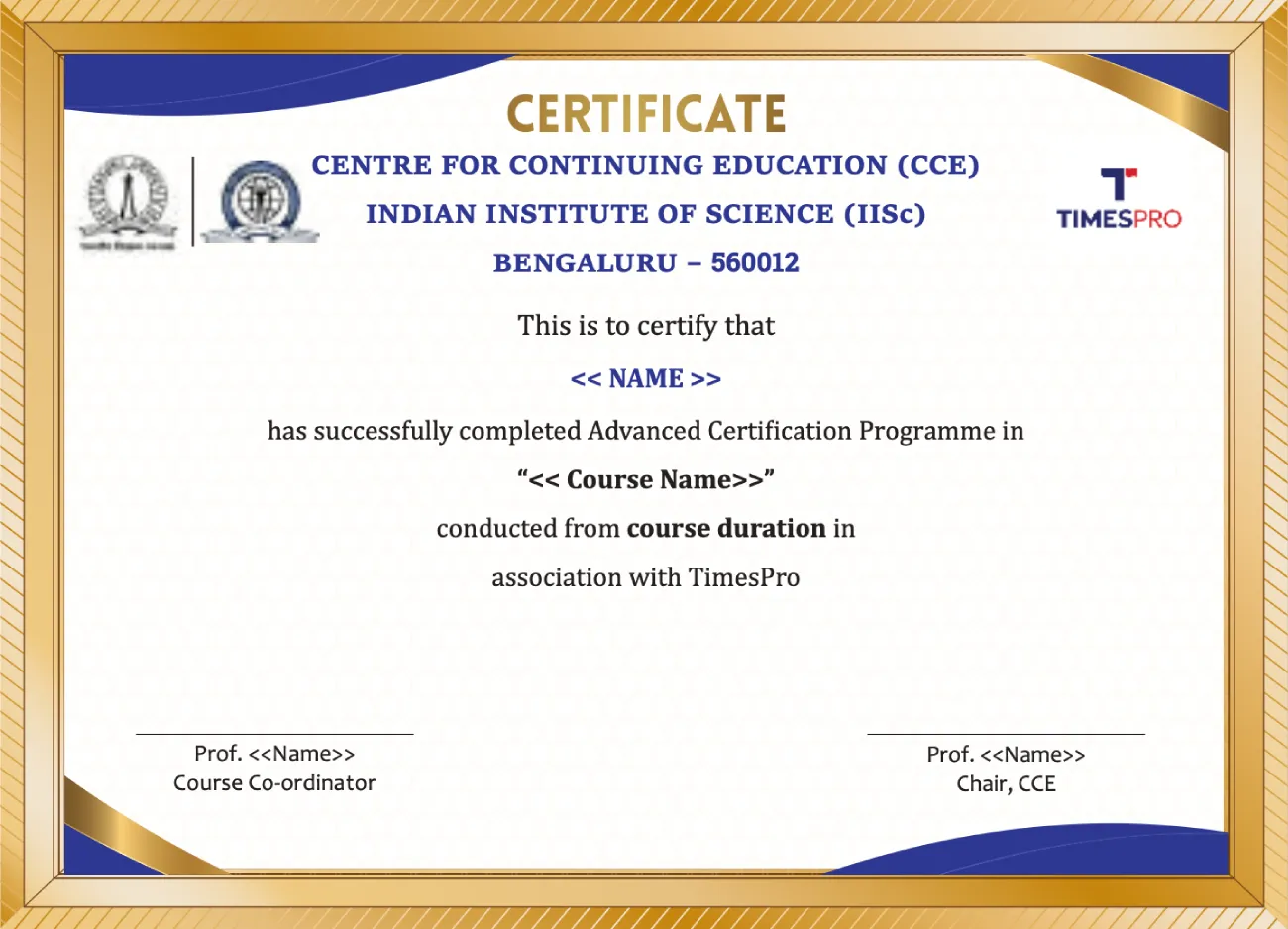
Candidates who score at least 50% marks overall and have a minimum attendance of 50% will receive a ‘Certificate of Completionʼ from Centre for Continuing Education (CCE) at IISc.

Candidates who score less than 40% will receive a ‘Certificate of Participationʼ from Centre for Continuing Education (CCE) at IISc.

Career Opportunities After the Programme

  • VLSI Design Engineer
  • Analog / Mixed-Signal Design Engineer
  • Physical Design Engineer
  • Semiconductor Process Engineer
  • Verification Engineer

Programme Director

mit

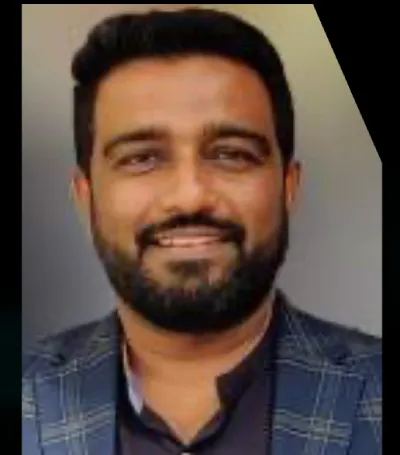
Dr. Hardik J. Pandya Associate Professor
Department of Electronic Systems Engineering Division of Electrical, Electronics, and Computer Science Indian Institute of Science, Bangalore
Associate Faculty
Department of Design and Manufacturing Division of Mechanical Sciences Indian Institute of Science, Bangalore

Dr. Hardik J. Pandya is an Associate Professor in the Department of Electronic Systems Engineering, Division of EECS, and Associate Faculty, Department of Design and Manufacturing, Division of Mechanical Sciences, Indian Institute of Science, Bangalore. Dr. Pandya heads three laboratories in ESE focused on developing a new class of biomedical devices and technologies. Before joining IISc, he worked as a postdoctoral scientist in the Department of Mechanical Engineering, Maryland Robotics Center, University of Maryland, College Park (2012-2016) and in the Department of Medicine, Brigham and Women's Hospital–Harvard Medical School (2016-2017).

Read More >

He obtained his Ph.D. in microengineering systems from the Indian Institute of Technology Delhi (2013). His lab comprises twenty-eight scholars (three postdoc, thirteen Ph.D., one M.Tech., and eleven project assistants). In the eight years, he graduated eight Ph.D. scholars and eighteen M.Tech. Scholars, in addition to guiding three postdoctoral fellows and several research staff. Alums from his lab have pursued roles in academia and prominent industries, joining esteemed institutions and companies like A*STAR, IMEC, IIITDM Kancheepuram, Intel, NVIDIA, MAXLINEAR, Texas Instruments, Samsung, IIT Gandhinagar, and Delft University.

His current research focuses on minimally invasive and non-invasive technologies with an emphasis on but not limited to cancer diagnosis (brain, breast, head, and neck), e-nose (diabetes, breast cancer screening), and Neuroprotective Therapies for Acute Stroke, Parkinsonʼs and Epilepsy. He received the prestigious Early Career Research Award from the Science and Engineering Research Board, Government of India 2017. Dr. Pandya received the prestigious ISSS Award 2020 under the Young Scientist Award category for the work done in India in micro and smart systems. He was also awarded the DST Abdul Kalam Technology Innovation National Fellowship in 2023. Dr Pandya, as PI from IISc, and the team from IIT Gandhinagar and NIMHANS Bengaluru have been awarded the Team Science Grants Award (US$1.2 Million) from the India Alliance for developing an indigenous imaging-based intraoperative probe for brain tumour delineation, an important health challenge for India.

Read Less <
Programme Faculty

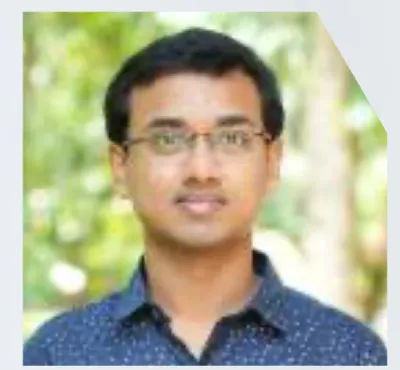
Dr. Debayan Das
Assistant Professor
Department of Electronic Systems Engineering
Division of Electrical, Electronics, and Computer Science Indian Institute of Science, Bangalore

Dr. Debayan Das is an Assistant Professor in the Department of Electronic Systems Engineering, Division of EECS, Indian Institute of Science, Bangalore. He has worked as a Security Researcher at Intel, USA, during 2021-22 and as a Research Scientist in the Intel Labs, USA, during 2022-23. He received his Ph.D. and M.S. in Electrical and Computer Engineering from Purdue University, USA, in 2021. Before his Ph.D., he worked as an Analog Design Engineer at a startup based in India.

Read More >

He has interned with the Security Research Lab, Intel Labs, USA, over the summers of 2018 and 2020. His research interests include mixed-signal IC design, biomedical circuits, and hardware security. Dr. Das received the IEEE HOST Best Student Paper Award in 2017 and 2019, IEEE CICC Best Student Paper Award in 2021, the Third Best Poster Award in IEEE HOST 2018, and the 2nd Best Demo Award in HOST 2020. In 2019, one of his papers was recognized as a Top Pick in Hardware and Embedded Security. He was recognized as the winner (third place) of the ACM ICCAD 2020 Student Research Competition (SRC).

During his Ph.D., he was awarded the ECE Fellowship during 2016–2018, the Bilsland Dissertation Fellowship in 2020–2021, the SSCS Pre-doctoral Achievement Award in 2021, and the Outstanding Graduate Student Research Award by the College of Engineering, Purdue University, in 2021 for his outstanding overall achievements. He has authored/co-authored more than 55 peer-reviewed conferences and journals, including 2 book chapters and 3 US patents. He has been a primary reviewer for multiple reputed journals and conferences, including TCAS-I, TVLSI, TCAD, Design & Test, TODAES, JETCAS, TBME, IEEE Access, IoTJ, DAC, VLSI Design.

Read Less <

V. Naga Krishna
Scientific Officer
Department of Electronic Systems Engineering
Division of Electrical, Electronics, and Computer Science Indian Institute of Science, Bangalore

V. Naga Krishna is a Scientific Officer at IISc Bangalore in the Department of Electronic Systems Engineering, Division of EECS. He obtained his M.E (Communication Systems) from P.S.G College of Technology, Coimbatore. He is an awardee of the NPTEL-AICTE FDP certificate with a Gold medal.

Read More >

He worked in the simulation and fabrication of Energy harvesting systems, DC-DC converters, Power management, and R.F. antenna Impedance matching circuits with applications in Internet of Things (IoT) design. His current work focuses on “Sensor Instrumentationˮ and “Analog Circuits Design.ˮ He teaches: “Design of Analog Circuitsˮ and “Analog Electronics and Sensor Instrumentationˮ courses in the Department of Electronic Systems Engineering, Division of EECS, IISc Bangalore.

He has guided/ reviewed MTech students in their project work in Analog electronics, Sensor instrumentation with applications in biomedical devices and technologies. He has authored course material for: “Information Technology Security/Introduction to ISO 27000ˮ for IGNOU under the ACISE program. He has also worked in the “National Telecom Test-bed Projectˮ- sponsored by the Department of Telecommunications (DoT), the government of India, as a team lead in (1) Security testing of VOIP servers based on Common Criteria, FIPS 140-2, and (2) Preparation of equipment specific Test Suites of Telecom equipment based on Security standards like 3GPP, ITU-T X.805.

Read Less <

Dr. Uttam M. Pal
Assistant Professor
Department of Electronics and Communication Engineering
Indian Institute of Information Technology, Design and Manufacturing Kancheepuram

Dr. Uttam Pal is an Assistant Professor in Biomedical Engineering Stream, Department of Sciences and Humanities, IIITDM Kancheepuram-Chennai. He obtained his Ph.D. from the Department of Electronic Systems Engineering, Indian Institute of Science Bangalore in 2021, where he worked on the design and development of novel multimodal cancer diagnosis systems using optical, thermal, and acoustic modalities.

Read More >

His M.Tech is from the Electrical Department, IIT Bombay in 2013, where he specialized on computational electromagnetics. He has more than 8 years of industrial experience while working as Team Lead (High-Frequency Electromagnetics) at COMSOL Multiphysics (6 + years), Patent research engineer at Evalueserve (1 year), and Technology Analyst at an opto-semiconductor startup: De Core Science and Technologies (~ 1 year).

His research interest lies in developing novel optical tools for intraoperative cancer margin assessment and diagnosis of disease (breast cancer and oral cancer).

Read Less <

Dr. Anil Vishnu G. K.
R&D Engineer, IMEC Belgium
Ph.D. (Bioengineering), IISc Bangalore

Dr. Anil Vishnu graduated from NIT Calicut and holds a Ph.D. in Bioengineering from IISc, Bangalore (2022). He worked with Nvidia Graphics and Bharat Electronics Limited before pursuing his M.Tech and Ph.D. He applies his expertise in system engineering and instrumentation to develop next-generation biomedical solutions at IMEC, Belgium, as an R&D Engineer.

Read More >

Dr. Anil Vishnu's doctoral research focused on developing label-free methods for breast cancer diagnosis, earning him the Gandhian Young Technological Innovation. Award (2020). He is also a recipient of the AWSAR award from the Department of Science and Technology for popular science writing.

Driven by a passion for clear communication, Dr Anil Vishnu seeks to develop engaging pedagogies to explain complex engineering concepts and research methodologies. His current research interests lie in creating novel, label-free diagnostic technologies using a systems-thinking approach that integrates cutting-edge electronics, real-time computing, and sensor technology.

Read Less <